
Dental Implants Independence
A More Permanent Solution for Tooth Loss
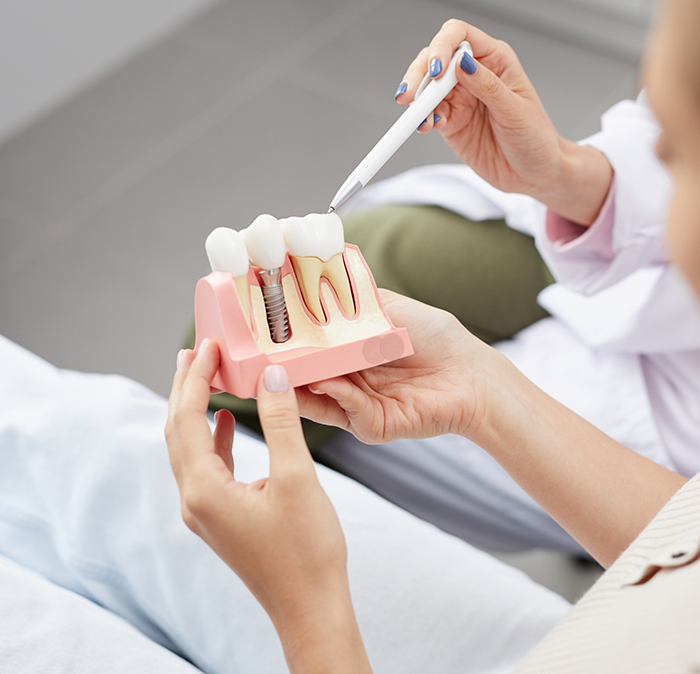
You can trust all our tooth replacements, but dental implants still stand as the best option. They restore whole teeth (not just crowns) and offer the most lifelike results you could get. Dr. Garner even places them in-house to ensure you have the best possible care. He and our team will gladly provide you with single implant posts, All-on-4 treatments, and more. For further details, just keep reading or book a consultation soon for dental implants in Independence!
Why Choose Justin Garner Dentistry, LLC for Dental Implants?
- Dental Implant Surgery Done In-House
- Dental Sedation for Anxious Patients
- Flexible, Third-Party Financing Available
What Are Dental Implants?
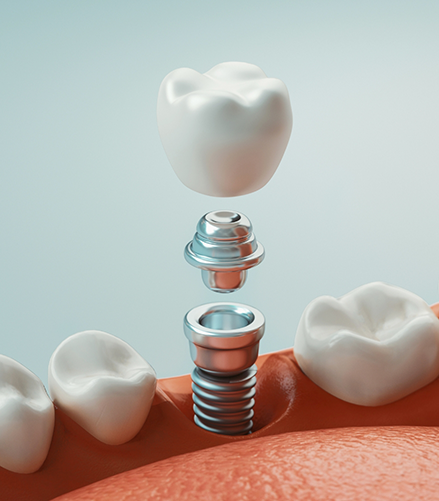
Dental implants are small, tooth-sized posts made of strong titanium. Thanks to this design, they’re able to act as alternative roots for your now-missing teeth. Once set in your jaw, they’ll slowly fuse with the bone, become secure parts of your mouth, and blend in seamlessly.
Who Dental Implants Can Help

Whether you’re missing one of your front teeth, several of your molars, or you don’t have any of your natural teeth left, we have good news: dental implants are quite versatile. So, if you are interested in this tooth-replacement solution, don’t hesitate to schedule a consultation with our dental implant dentist in Independence, Dr. Justin Garner. You’re also welcome to read on to learn a little more on the topic, including a few qualities we look for in a good candidate.
Who Is a Good Candidate for Dental Implants?

During your consultation, Dr. Garner will review your dental history, complete a comprehensive oral exam, and learn all about your lifestyle, habits, and smile goals. With all of this information, he can determine:
- If your jawbone is strong enough to support dental implants
- If your gums (and any remaining teeth you have) are healthy
- If you use tobacco products
- If you’re committed to healthy habits, like brushing consistently
If your jawbone is strong, your gums are healthy, and you take good care of your smile, then there’s a good chance that you’ll be a candidate for dental implants. If that’s not the case, don’t get discouraged – we may be able to provide the necessary preliminary care, like a bone graft.
Missing One Tooth
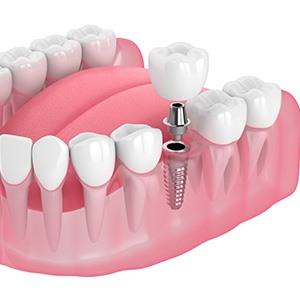
Are you missing one of your teeth? If so, you know first-hand the negative impact it can have on your self-esteem, your speaking patterns, and your ability to eat certain foods. The good news is that we can replace both the root and crown thanks to dental implants! If we decide together that this is the best tooth-replacement solution for you, then we will insert the post into your jawbone, allow the two to fuse together, and secure a custom-made, lifelike dental crown over top.
Missing Multiple Teeth
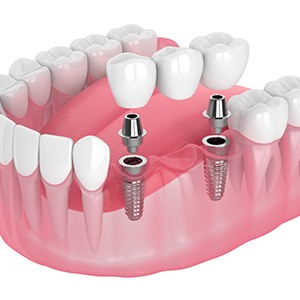
What if you are missing several teeth consecutively? There was once a time when a traditional bridge was the only option. Now, there is another one: an implant bridge. The main difference is that the prosthetic teeth are secured in place with two dental implants instead of two dental crowns. Of course, this restoration also doesn’t require any healthy teeth surrounding the gap to be altered, which is another reason it’s so widely loved by patients and dentists alike.
Missing All Teeth
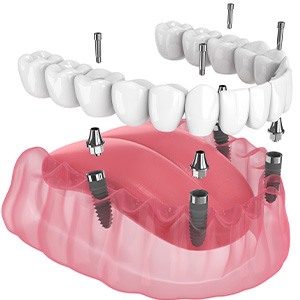
If you don’t have any of your natural teeth left, don’t just assume traditional dentures are the only path to a complete smile. Implant dentures allow us to secure your restoration in place with several strategically placed dental implants. This results in unmatched stability as well as an extremely natural look and feel. Plus, with proper care and maintenance, yours can last for well over a decade!
The 4-Step Dental Implant Process
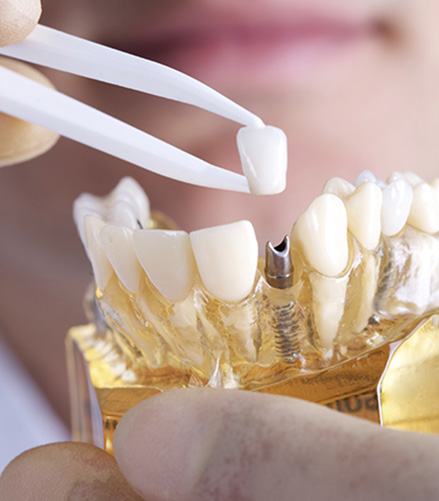
If you want to learn how dental implants work in Independence, it’s important that you understand there is a four-step process that requires an initial consultation, dental implant surgery, osseointegration and abutment placement, and the final delivery of your custom restoration. While your case will look different than another patient’s, the same four steps must be followed if successful results are to be achieved.
Initial Dental Implant Consultation
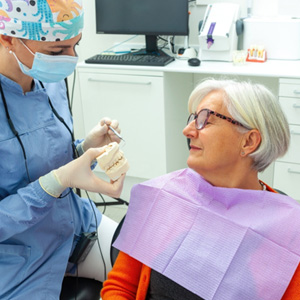
Before you can undergo dental implant surgery, you’ll consult Dr. Garner about your treatment. This discussion allows him to inquire about your smile goals and any concerns you might have, as well as answer your questions and explain how he plans to help you achieve your desired smile.
He will closely examine your mouth and review your medical history to determine if preliminary treatment is necessary. Based on the health of your teeth and gums, we may suggest bone grafting, gum disease treatment, or tooth extraction.
Dental Implant Surgery

If you and Dr. Garner agree that dental implants are right for you, you can expect to remain in one location for the entire process. This means that once you are cleared for oral surgery, you won’t need to visit an outside specialist for the placement of your new teeth. Instead, Dr. Garner will perform the surgery in our office, allowing for greater convenience.
After making a few incisions in your gums, he will place each titanium post into the appropriate socket, ensuring its placement and positioning are correct before closing the gum tissue. Protective healing caps will be put on top of each post while you recover.
Dental Implant Osseointegration/Abutment
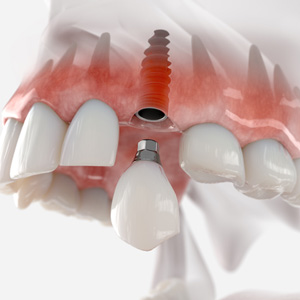
After returning home from your procedure, your dental implants will begin to fuse with your jaw in a process known as osseointegration. This can take anywhere from 3-6 months, as it’s necessary for your posts to remain firmly in place before any additional steps can be taken.
Once you are healed, and Dr. Garner is pleased with the stability of your implants, he will place metal abutments (i.e., connectors) on top of your implants. This ensures that your custom restoration will remain affixed to your implants.
Delivery of Dental Implant Restorations
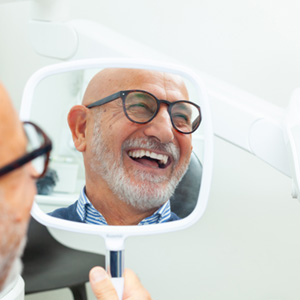
Before you can begin to enjoy life with a fully restored and rebuilt smile, you will need to have your custom dental crown, bridge, or denture secured in place. Earlier in the process, we will make impressions of your smile so that an accurate and comfortable restoration can be crafted.
When ready, we will attach it to the tops of your implants and make sure it fits properly and looks completely natural. After making any final adjustments, we will clear you to begin taking full advantage of the many benefits dental implants provide.
Benefits of Dental Implants
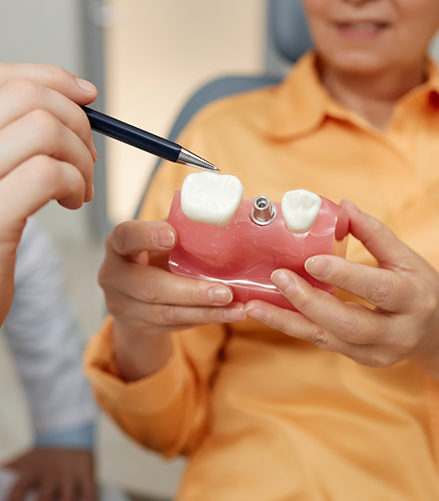
More than half a million dental implants are placed every year, and it’s not hard to see why they have become so incredibly popular. Because of the specialized process through which they are placed in the jawbone, these amazing prosthetic devices offer a range of incredible benefits that traditional restorations cannot match. Here’s a quick look at how dental implants from Justin Garner Dentistry can improve your quality of life.
Day-to-Day Benefits

Dental implants can improve your day-to-day life in ways like:
- Improved chewing power: Dental implants restore almost all your original chewing power so you can enjoy all sorts of tasty items like tender steaks, crunchy nuts, and snappy raw veggies.
- Easy oral hygiene: Since dental implants require only the same cleaning measures as natural teeth, you won’t have to worry about the elaborate and time-consuming cleaning rituals required by traditional dentures and bridges.
- Secure hold: Dental implants are securely anchored to the jawbone so patients will never have to worry about their restorations sliding out of place or falling out during conversations.
Health Benefits

Dental implants can enhance your oral and overall health in ways like:
- Enhanced diet: Dental implants can make it easier to chew thoroughly and receive adequate nutrients. This can help the patient avoid issues like indigestion and malnutrition.
- No sliding: Dental implants hold restorations mounted upon them securely in place so they won’t slide about on the gum tissue. This can prevent irritation of the soft tissues as well as injuries to the remaining teeth.
- Prevent oral infections: Simple hygiene requirements make it easy to eliminate infectious material and avoid destructive infections like gum disease and tooth decay.
- Supporting remaining teeth: Implants can help prevent misalignments or dental drift caused by tooth loss.
Long-Term Benefits

Dental implants can also deliver a variety of long-term benefits such as:
- Jawbone preservation: Dental implants provide the jaw with the stimulation it needs to remain healthy and strong, which can help the patient avoid further tooth loss and maintain a youthful appearance.
- Impressive success rate: Dental implants are 95% successful even ten years after being placed.
- Long lifespan: Dental implants can last for several decades or possibly a lifetime if they receive excellent care.
- Permanent solution: The restorations mounted upon dental implants can last several times longer than traditional varieties, and this can save the patient thousands of dollars over the decades by negating the need for frequent replacements.
- Confidence: Having a complete smile you can be proud of can make it easier to maintain a positive outlook and leave favorable first impressions at social and business gatherings.
Common Questions about Dental Implants
Do dental implants hurt?
There may be some discomfort during the minor surgical procedure of receiving implants. However, you shouldn’t feel anything with local anesthesia. Once your implants are in place, you likely won’t be able to feel them at all! Replacement teeth attached to implants are also less likely to experience uncomfortable damage such as cracks or breaks.
Can dental implants be removed?
While dental implants can technically be removed, there would most likely never be a reason to remove them. The dental implants themselves fuse with your jawbone and become part of it, lasting for decades or potentially the rest of your life. The artificial teeth we attach to them usually last for at least five to seven years, after which they may need replacement.